What we install

Energy Efficient Electric Radiators

All electric heating is 100% efficient at the point of use. What separates a good system from an expensive one is control.
Certified & registered

  • MCS Certified
  • NAPIT Approved
  • RECC Registered
  • Approved Sunamp Installer

What "efficient" honestly means here

Every electric heater converts essentially all the electricity it draws into heat, so no electric radiator is meaningfully more efficient than another in that narrow sense. Anyone claiming otherwise is selling something. What genuinely differs is how well a system avoids heating rooms nobody is in, at times nobody is there — and that is a question of controls, zoning and correct sizing.

  • Individual room control
  • Accurate thermostats and schedules
  • Sized to the room, not the wall space
  • Slim, low-profile units

The specification

What you're actually buying

Heat delivery
Convection with enhanced radiant heat, for an even, natural warmth.
Heat retention
Magmatic stones keep the room warming after the element stops.
Smart modes
Open-window detection, geolocation and usage records.
Control
Per-room 24-hour programmable thermostats.
Formats
Standard, vertical and low-level ranges.
Warranty
15 years on the radiators.

The range

Fitted, not photographed in a studio

Every photograph here is our own work, installed by our own team.
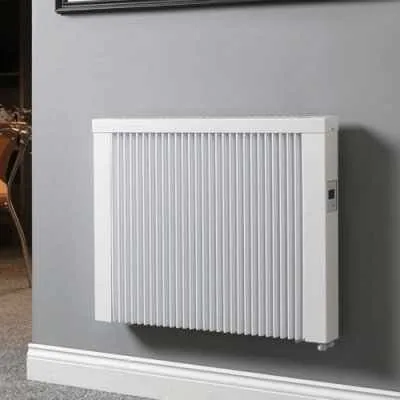
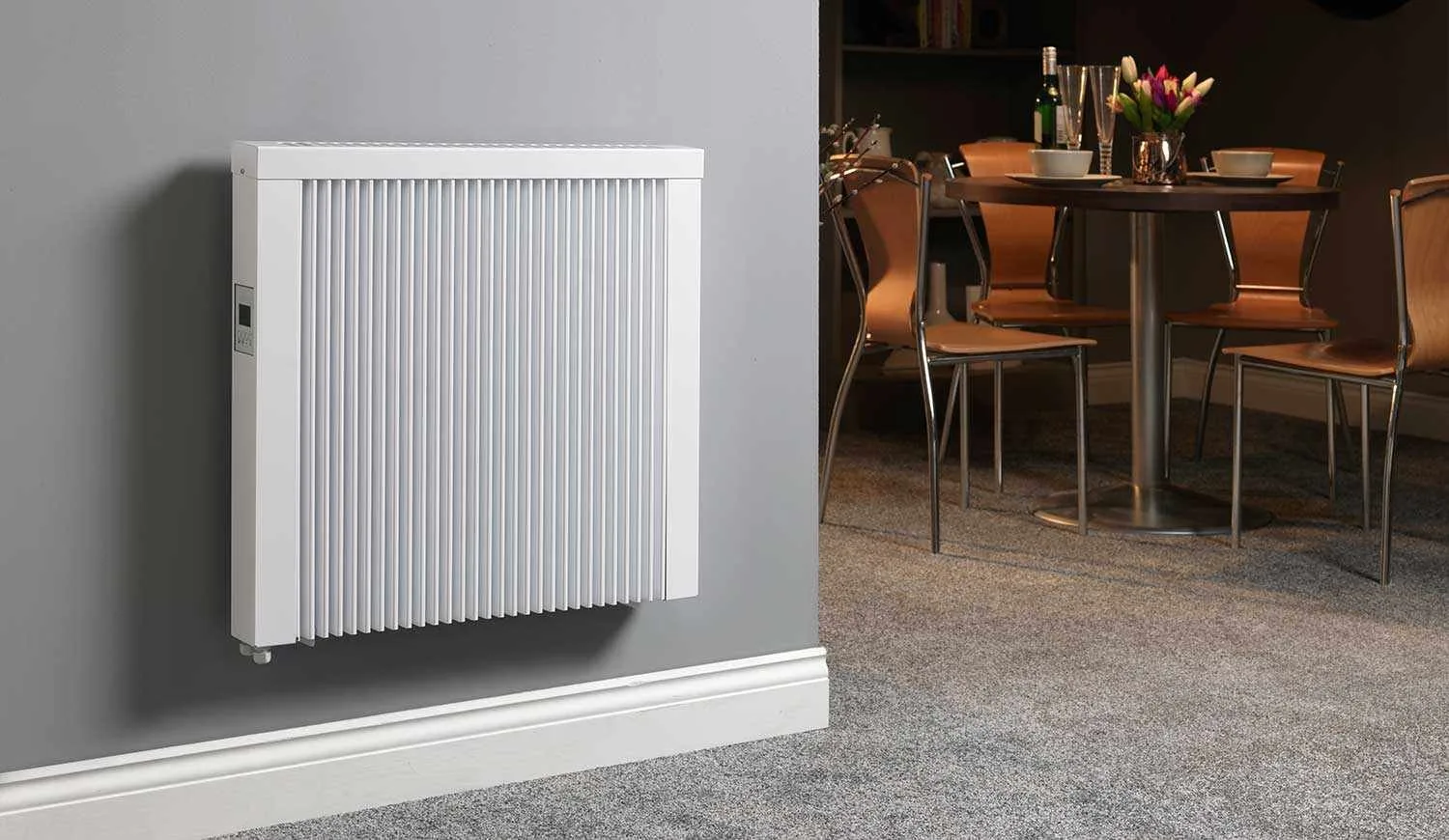
White electric radiator with a ribbed front on a grey wall
Slimline electric radiator, living room
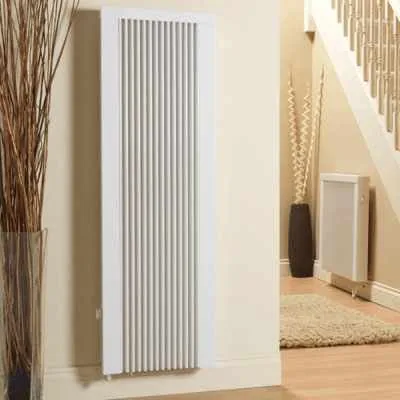
Tall vertical electric radiator in a hallway beside the stairs
Vertical radiator beside the stairs
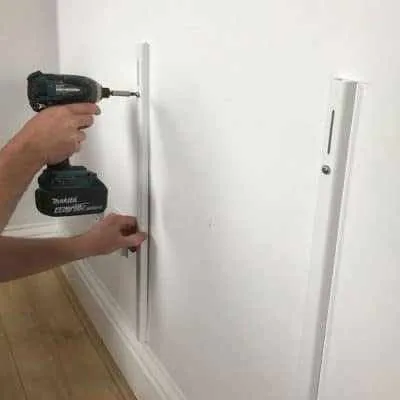
Installer drilling a wall bracket during a radiator fitting
Fitting the wall brackets

Heat retention does the quiet work

Our radiators are built around Magmatic heat retention stones — patented technology that keeps emitting warmth for up to an hour after the element switches off. The stones run vertically down both sides of the radiator, spreading heat evenly across the surface with no hot spots, and by slowing how fast the room cools they reduce how often the element needs to draw power at all.

Where the saving actually comes from

Heating four rooms instead of eight. Dropping the bedrooms to a lower temperature during the day. Not running the whole house at a constant temperature because the only control is one dial. Those are the changes that show up on a bill, and they come from designing the system properly rather than from any individual radiator.

Modes that stop the quiet waste

The radiators carry the small automations that save money without being thought about. Open-window detection drops the output when a room is being aired, rather than heating the street. The geolocation function can wind the heating down as the house empties. And the usage records in the app show where the electricity is actually going, room by room.

See the range for yourself

Supplied and installed across Bournemouth, Poole, Christchurch, Weymouth, Dorchester, Salisbury, Dorset, Hampshire, Wiltshire, Somerset, Devon — sized to each room at a free home survey, with a written recommendation and no obligation.
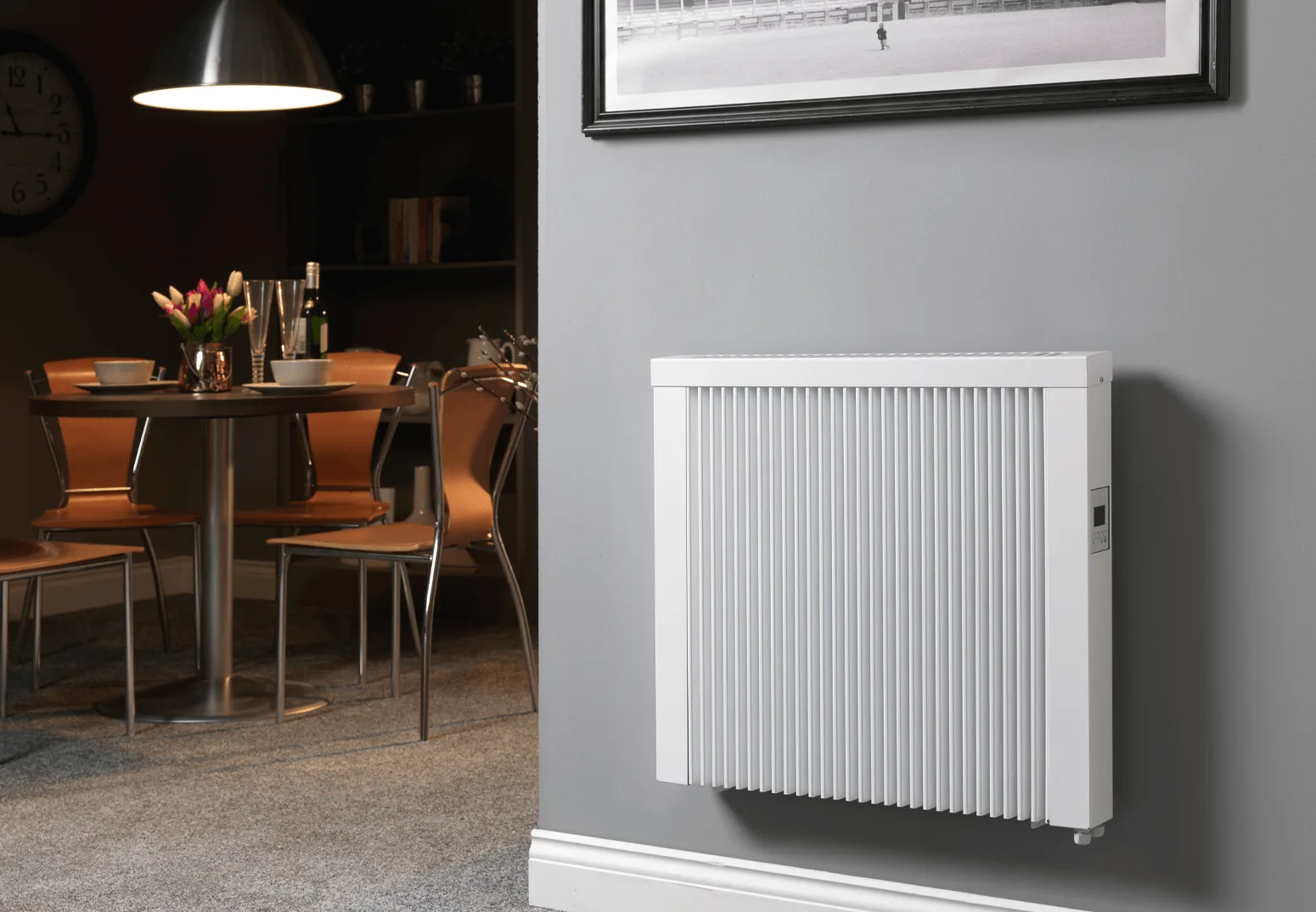

Request our free brochure The full range, posted to you free

Book your free home survey

Free survey, honest advice and a clear written quote. Call now or send us a message — we’ll get straight back to you.

Questions

Frequently asked questions

Are electric radiators cheap to run?
Electricity costs more per unit than gas, so we will not pretend otherwise. What keeps a well-designed system affordable is that nothing is wasted: every unit of electricity becomes heat in the room, the retention stones stretch each burst of power, and per-room control means empty rooms are not heated. Whether that adds up to cheap in your house depends on the property — which is what the survey works out.
What smart features are included?
Open-window detection, a geolocation function and usage records, alongside the per-room programmable thermostats. They are the features that quietly close the gap between what you meant to spend and what you actually spend.
What sizes do the radiators come in?
Three main ranges — standard, vertical and low level — so the right output fits the wall space available. Each room is sized at the survey.
What can I replace my night storage heaters with?
Usually either modern electric radiators controlled room by room, or high heat retention storage heaters where your tariff still rewards off-peak charging. Which suits you depends on the tariff, the building and how you use the house — that is what the free survey establishes.
Which electric radiator is the most efficient?
Honestly, they are all essentially 100% efficient at the point of use — every unit of electricity becomes heat in the room. What varies between systems is control: whether you can heat only the rooms you are using, only when you are using them. That is where the saving comes from, not from any particular radiator.
Can I replace my gas boiler with electric heating?
Yes. We replace gas boilers and their radiator circuits with electric heating and hot water, which removes the flue, the gas connection and the annual gas safety inspection. Electricity costs more per unit than gas, so at survey we will be straight with you about running costs and about whether solar or battery storage changes the picture.
Do you remove and dispose of the old system?
Yes. Removal and disposal of old storage heaters, convector heaters, boilers and cylinders is part of the job, and we make good afterwards.
What areas do you cover?
We are based in Bournemouth and work across Dorset, Hampshire, Wiltshire, Somerset and Devon, and into West Sussex, Surrey, London, Kent, East Sussex and Oxfordshire.
Are you certified?
Yes. Dynamic Heaters is MCS certified, NAPIT approved, RECC registered and an approved Sunamp installer.
Do you charge for a survey?
No. The home survey and the written recommendation that follows it are free and carry no obligation.
Do you work on social housing and commercial projects?
Yes. Alongside private homes we have completed social housing heating and hot water upgrades, including a New Forest District Council project covering sixteen properties, and community buildings such as a village hall in Lytchett Matravers.

Still deciding? The survey is free, and so is walking away afterwards.